 goSmash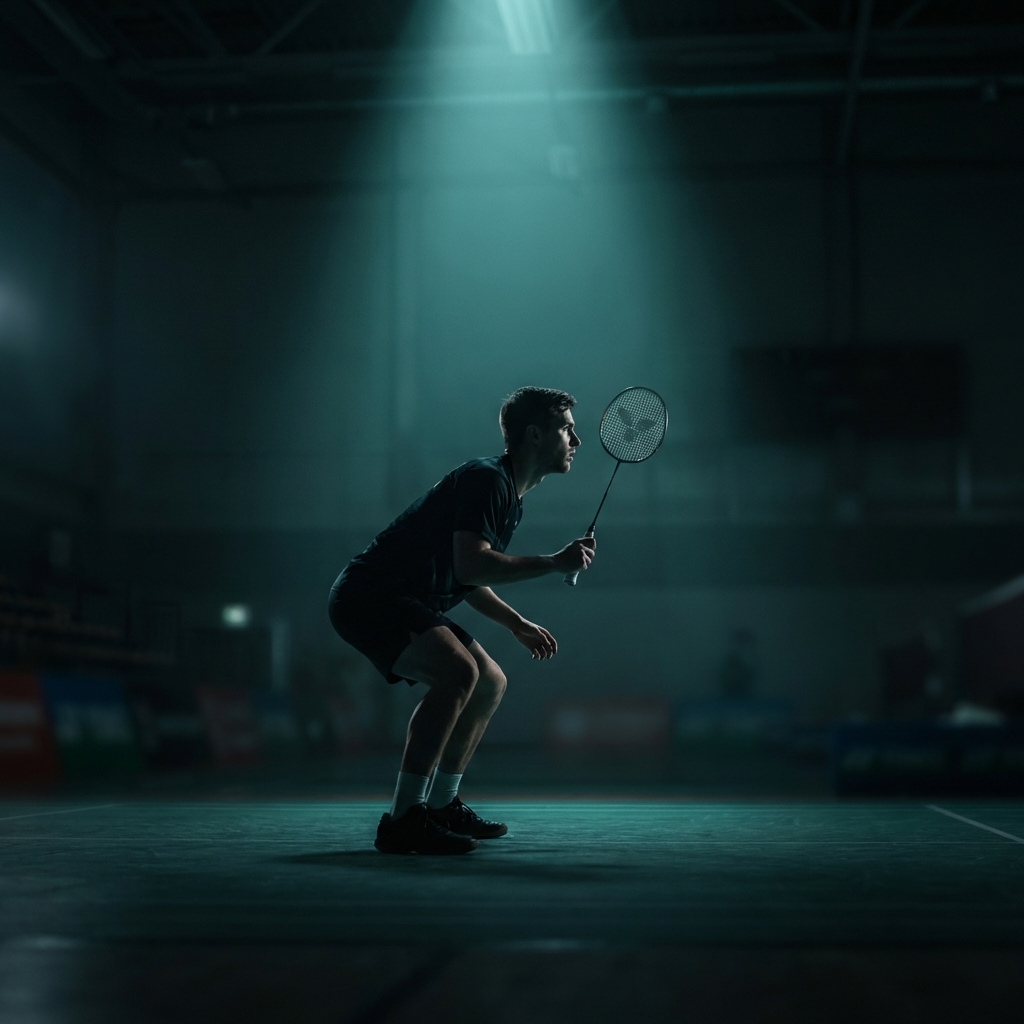
Offence wins rallies. Defence wins matches. The players who survive the best attackers are the ones who turn smashes into counter-attacks — and that's a skill you can actively train, not a personality trait.
Most club players treat defence as a last resort. They'd rather attack badly than defend well. As a result, they collapse the moment they face someone who can smash, and blame it on "being outclassed." Almost always, they weren't outclassed — their defensive fundamentals just weren't there.
Good news: badminton defence is one of the most teachable skills in the sport. Five specific things, drilled consistently, will turn you from a player who loses to attackers into one who frustrates them.
The defensive ready position
Everything starts with how you're standing when your opponent prepares to attack. If your stance is wrong, you're already losing the rally.
The defensive ready position:
- Feet shoulder-width apart, slightly wider than your attacking stance.
- Weight on the balls of the feet, knees bent, body low. Think of a goalkeeper preparing for a shot.
- Racket held low and in front, at roughly thigh height, racket face pointing up. You want the racket underneath the smash — not beside it or above it.
- Grip: loose backhand grip. Most smashes come to your body or backhand side. The backhand grip covers both sides without needing to switch.
- Eyes on the attacker's shoulder and contact point, not on the shuttle itself. More on this in a moment.
The single biggest fix for most club players is simply being lower. You cannot defend from a tall, upright stance. Drop your centre of gravity, bend your knees, and stay there.
The three defensive returns
When a smash comes, you have three options. Knowing which to pick and when is what separates good defenders from desperate ones.
1. The block
The default return. You hold the racket still, absorb the smash with a passive racket face, and the shuttle deflects softly into your opponent's front court. A good block turns their attack into a net situation — which is the best outcome for you because you neutralise their pace and force them to reset.
When to block: whenever you're balanced and can get your racket under the shuttle. This is your default — block unless there's a reason not to.
2. The drive return
When the smash isn't that steep (opponent hit from mid-court, not rear), you can counter-attack with a flat drive. Instead of softening the shuttle, you send it back fast and flat, ideally through the attacker's body or into a gap. This is aggressive defence — it turns the rally back in your favour in one shot.
When to drive: when the incoming smash is flat, not steep, and you're balanced and in position. Drives are harder to execute than blocks because your timing has to be perfect.
3. The defensive lift
Sometimes a smash is so good that you can barely get a racket on it. In that case, just lift it high and deep into the centre of the opponent's court. You're giving up offensive potential to stay alive. That's fine — surviving a strong attack is its own victory.
When to lift: when you're stretched, off-balance, or late. Don't try a block or drive from a bad position. Lift and reset.
Reading the attacker's shoulder
Here's a skill almost no club player has: watching the attacker's body instead of the shuttle. Top defenders start moving before the smash is even struck, because they've read it in the attacker's mechanics.
What to look for:
- Shoulder angle. A square-shouldered attacker is hitting straight. A rotated shoulder is hitting cross-court. You can see this in the final preparation frame before contact.
- Contact point. A shuttle being hit from directly overhead will be steep. A shuttle being hit from slightly in front will be flatter. A shuttle hit from behind will usually be a clear, not a smash.
- Arm position. A fully extended arm means maximum power. A bent arm usually means a half-smash or a slice — less pace, more deception.
Here's the drill: watch pro matches and deliberately ignore the shuttle. Stare at the attacker and try to predict where the smash will go before it's hit. Your eye will train in a few weeks and you'll start reading your own opponents much better.
The mental side of defence
Good defenders are not mentally defensive. They don't think "oh no, here comes a smash." They think "here comes my chance to counter." That framing difference is enormous.
When you see defence as an opportunity — every smash is a setup for your own attack via block or drive — you stay calm, your racket stays in front of you, and you make better decisions. When you see defence as something bad happening to you, your body goes tense, you drop your racket, and you panic.
Before your next match, consciously reframe: smashes are not threats, they're setups for me to counter. Say it out loud in warmup if you need to. The mental reframe works.
Solo drills for defence
Wall block drill
Stand 2–3 metres from a wall. Hit a drive into the wall, then let the rebound come at you and practice absorbing it with a passive block (aiming the shuttle back at the wall softly). Focus on racket stillness — the racket should move as little as possible at contact. Target: 3 sets × 30 reps.
Shadow defence stance
Hold the defensive ready position for 60 seconds. No racket movement, just staying low, racket in front, on the balls of your feet. This feels stupid but it builds the leg endurance you need to actually hold the stance for a whole rally. Target: 3 sets.
Split-step in stance
In the defensive ready position, do a tiny split step every 2 seconds. Land back in the stance. Do 60 seconds, rest 30 seconds, repeat 5 times. This trains both the split habit and the leg endurance.
Partner drills when you have one
- Multi-shuttle smash defence: partner feeds continuous smashes from mid-court, you block back. Focus on one return type per set (all blocks, then all drives, then all lifts).
- Smash + defence cycle: you lift, partner smashes, you block, partner lifts, repeat. This simulates the full rally cycle and drills both offence and defence under fatigue.
The bottom line
Defence is not about hitting harder or faster. It's about being in the right position, with the right stance, making the right decision in the split second before contact. All of that is trainable, and most of it can be trained alone with a wall and a racket.
Pick one thing from this article and work on it for two weeks. The ready position is probably the biggest lever for most players — bend your knees deeper, drop your racket lower, stay on the balls of your feet. That alone will make your defence visibly better in your next match.
Check how often you're actually defending
goSmash tracks the ratio of attacking vs defensive shots in your match and flags how often you get stuck defending. Know where the pressure is coming from and you can start countering it.
Closed testing. No spam, and you can leave any time. Prefer the full form? Early access page.