 goSmash
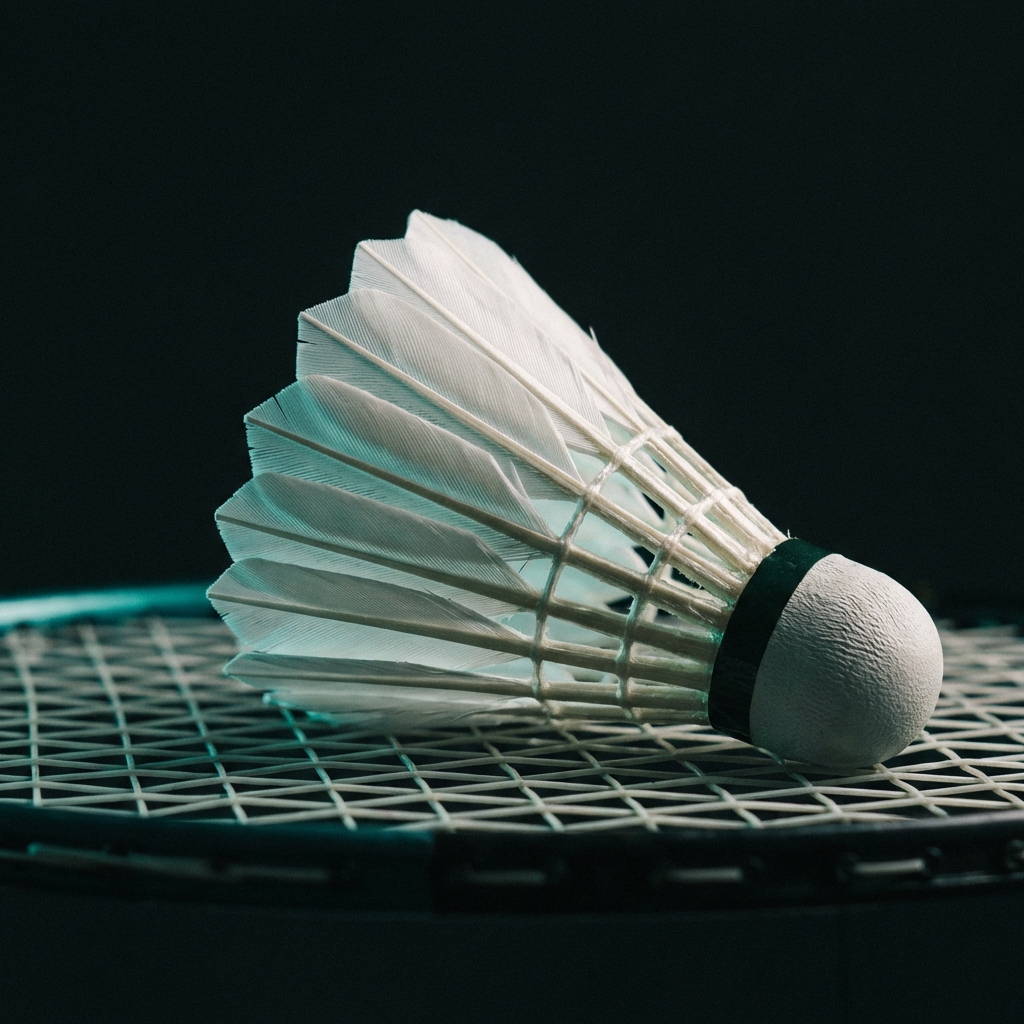
Your smash isn't slow because you're weak. It's slow because of three specific mechanical errors — and you probably have at least two of them.
The badminton smash is the most visually explosive shot in the sport and also the most misunderstood. Club players spend years trying to hit harder by swinging harder, when the real speed comes from a kinetic chain that starts at the feet and ends at the wrist. Get the chain right and the racket head does almost all the work for you.
This guide breaks down the smash the way a coach would — starting with why it's a whole-body action, then the three common errors that leak power, then the drills that fix each one.
The kinetic chain: why the smash is not an arm shot
A professional smash can reach 400+ km/h. No one has 400 km/h of arm strength. What top players have is a kinetic chain — a sequenced, whip-like transfer of force from the ground up. Each body segment accelerates the next, and the racket head gets the final amplification from the wrist snap.
The sequence, in order:
- Ground push — back foot drives into the floor.
- Hip rotation — hips open toward the net.
- Core rotation — torso follows the hips, slightly delayed.
- Shoulder rotation — shoulders rotate through, lagging the core.
- Elbow extension — arm straightens.
- Forearm pronation — the forearm rotates inward (this is where most of the racket head speed comes from).
- Wrist snap — final whip into contact.
The key insight: each link is delayed relative to the one before it. That lag is what creates the whip. If everything fires at the same time, you get a push, not a whip. That's the single biggest reason club smashes look strong but land weak.
The grip: thumb up, forefinger forward
Before you can build a good smash, you need the right grip. Almost all smash problems at beginner and intermediate level trace back to using a forehand grip that's too tight or too neutral.
- Use a forehand grip — the V between your thumb and forefinger aligns with the narrow edge of the handle. Same grip as a forehand clear.
- Relaxed fingers — think "holding a small bird." You grip hard only at the moment of contact, not for the entire swing.
- Thumb supports, doesn't drive — the forefinger is the power finger on the smash.
A tight grip throughout the swing is the single fastest way to kill racket head speed. Your forearm cannot pronate freely if your fingers are clenched. Loose fingers, tight at contact — that's the rhythm.
The stance: side-on, weight back
A proper smash starts before the shuttle even arrives. You need to be in a side-on stance with your non-racket shoulder pointing toward the net and your weight loaded onto the back foot.
Checklist:
- Non-racket arm is raised and pointing at the shuttle (this is your aiming system and your balance).
- Back knee is slightly bent, weight over the ball of the back foot.
- Racket is already in the "backscratch" position behind the head, not still travelling up.
- Shuttle is in front of you, not above your head.
If the shuttle gets behind you, the smash is already dead. You cannot generate a steep angle once you're reaching backward. Move your feet earlier — this is a footwork problem, not a swing problem.
The three errors that kill your smash
Error 1: Hitting with the arm instead of the body
The most common error by far. Players muscle the shot with the shoulder and arm, keeping the hips and core static. The result: a loud grunt, a hard looking swing, and a shuttle that travels 40% slower than it should.
How to spot it on video: Pause at contact. If your belt buckle is still facing the side of the court, you didn't rotate. Your hips should be facing forward by the time the racket meets the shuttle.
The fix — hip rotation drill: Stand side-on with a racket but no shuttle. Place a ball or towel at your back foot. Shadow-smash 20 times, forcing yourself to rotate your hips through until your back foot pivots onto the toe. You're not trying to hit anything — you're grooving the sequence. Do this daily for two weeks and the rotation becomes automatic.
Error 2: No forearm pronation
Players who come from tennis, squash, or no racket background often hit the smash with a flat, pushing action. The forearm doesn't rotate, so the wrist "snap" is actually just a wrist flex — which generates almost no racket head speed.
How to spot it on video: Watch your racket face in the last 10 frames before contact. If the string face is always pointing at the shuttle, you're not pronating. With correct pronation, the racket face rotates from slightly open to neutral in a fraction of a second, right at contact.
The fix — pronation drill: Hold the racket out in front of you with a forehand grip and the face pointing upward. Now rotate your forearm so the face flips down to the ground and back up — that's pronation. Do 30 reps per hand. Then combine it with shadow swings: wind up, swing, and exaggerate the pronation snap at the end. Multi-shuttle smash drills with a focus on racket face rotation (not power) will rewire the movement faster than anything else.
Error 3: Hitting the shuttle too low
A smash is steep or it's nothing. If your contact point is at head height instead of fully extended above your head, the geometry is against you — the steepest angle you can achieve is barely downward, and your "smash" becomes a fast clear.
How to spot it on video: At contact, your hitting arm should be fully extended and slightly in front of the body. If your elbow is bent or the racket is at ear height, the contact is too low.
The fix — footwork and timing: The reason players hit low is almost always that they arrived late. The shuttle dropped while they were setting up. The fix is not "jump higher" — it's move earlier. Practice the four-corner footwork drill: coach hits to rear court, you arrive in the backscratch position before the shuttle reaches its peak. Repeat until it feels easy.
Jumping is optional. A grounded smash with good mechanics beats an airborne smash with bad ones. Add the jump once the ground version is consistent.
When to smash (and when not to)
Technique is half the story. Shot selection is the other half. A perfect smash from the wrong position loses you the rally.
Good smash opportunities:
- High, short lifts that land mid-court or shorter.
- You're balanced, in front of the shuttle, with time to set up.
- Your opponent is out of position — off the centre, unbalanced, or caught moving the wrong way.
Bad smash opportunities:
- Deep lifts that force you to the back corners. Clear or drop instead.
- You're stretching sideways or backward. You cannot get the racket above the shuttle.
- Your opponent is in a perfect defensive stance waiting for it. Deception beats power here — try a drop or a half-smash.
A useful frame: the smash is not the shot that wins the rally, it's the shot that sets up the shot that wins the rally. Smash to create a weak return, not to end the point in one hit. You'll be more consistent and less predictable.
How to practice smashes on your own
If you don't have a coach feeding shuttles, you can still build your smash with solo work:
- Shadow smashes — 3 sets of 20, focusing on rotation and pronation. Zero equipment.
- Wall smashes — stand 3–4 metres from a wall, feed yourself and smash at the wall. The rebound gives you fast feedback on contact consistency.
- Multi-shuttle with a partner — have someone hand-feed you 20 shuttles to the rear court, one after the other. Focus only on one cue per set (e.g. "rotate hips," "pronate," "contact in front").
- Video review — record yourself smashing in a match and watch it back in slow motion. You'll immediately see which of the three errors you're making.
The shortcut: get your smash scored automatically
The hardest part of fixing your smash alone is not knowing what to look for. Even with this guide, the difference between "good pronation" and "no pronation" is hard to spot in your own footage — your brain fills in what it expects to see.
That's exactly what goSmash is built to do. Upload a match video and the app detects every smash you hit, scores your technique frame-by-frame (hip rotation, arm extension, contact height, racket path), and tells you which of the three errors you're making. It then generates drills targeted at the specific error — not a generic "work on smashes" recommendation.
Join the early access — it's free during the beta.
The bottom line
A powerful smash is not a matter of strength. It's a matter of sequencing — hips before core, core before shoulder, shoulder before arm, arm before forearm, forearm before wrist. Master that sequence and your smash gains speed without you gaining a single kilo of muscle.
Pick the one error from this article that sounds most like you. Do the drill for two weeks. Record your next match. Compare. That's the loop.
Find out which error is killing your smash
goSmash scores every smash in your match video — hip rotation, arm extension, contact point, and racket path — and lets you freeze any of them with a skeleton overlay to see exactly what your body was doing — so you know exactly what to fix.
Closed testing. No spam, and you can leave any time. Prefer the full form? Early access page.